Did you know that since 2010, all Border Patrol Agents, CBP Officers, and Air and Marine Operations agents joining Customs and Border Protection must pass a polygraph exam before getting hired?
This vital step in the CBP hiring process usually takes about four hours . Some examinations can last up to six hours based on your responses . Congress made this requirement official under the Anti-Border Corruption Act of 2010 , making it a mandatory step for all but one of these law enforcement positions within the agency.
Many candidates feel nervous about their upcoming polygraph. You’re not alone. The exam takes into account that applicants might be nervous . Polygraph administrators understand this natural reaction and design the test with this in mind. Your results will determine if you’re suitable for a law enforcement position where integrity remains one of CBP’s core values .
This complete guide will help you understand everything about the CBP polygraph screening process, whether you’re preparing for your first attempt or want to know why a previous exam didn’t go as planned. You’ll learn about typical questions and proven strategies that will help you succeed in this challenging but achievable part of your application process. Drawing from thousands of investigations, this article combines my firsthand experience with the most thorough guidance available anywhere in the world
Understanding the CBP Polygraph Exam

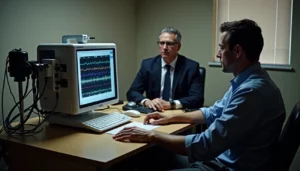
The CBP polygraph exam is a vital screening tool that uses biometric sensors to measure your body’s responses. These sensors track your heart rate, blood pressure, breathing, and skin conductivity while you answer questions [1]. This test protects national security interests and goes beyond basic paperwork.
Why CBP uses polygraph screening
The U.S. government started using polygraph screening at CBP in 2008. Congress made it mandatory in 2010 by passing the Anti-Border Corruption Act [2]. This law came as a direct response to border security concerns and the need for staff members with rock-solid integrity.
The main goal is simple – to make sure only trustworthy, reliable people with good judgment get jobs in sensitive national security positions [3]. The polygraph test adds hard data to back up what you say in your Electronic Questionnaires for Investigations Processing (e-QIP) and pre-screening interviews [1].
On top of that, this screening reveals deeper insights about your past behavior, connections, and character [4]. CBP has optimized its process to focus on law enforcement suitability instead of the broad “lifestyle” assessments they used before [3].
How the polygraph test fits into the CBP hiring process
Law enforcement positions at CBP need a detailed Tier V background check that has a polygraph exam [5]. You’ll take this test after finishing your e-QIP forms and first pre-screening interview [1].
Your polygraph results become part of what decides if you get a law enforcement position [4]. Note that almost every Border Patrol Agent, Customs and Border Protection Officer, and Air and Marine Operations Agent has passed this requirement [4].
Your polygraph results stay valid for two years [4]. If you don’t pass, you can try again after this period ends. CBP spent $72.30 million on its polygraph program between 2013 and 2016, giving 32,847 exams [5].
Federal rules let CBP share your background check and polygraph information with other federal employers who ask for it [5]. The Department of Homeland Security keeps all results in their shared records system.
Overview of polygraph exam duration and structure
A CBP polygraph exam usually takes four hours, though this can change based on each person [1]. You’ll only be hooked up to the polygraph machine for short 10-15 minute periods [2].
The exam has three phases:
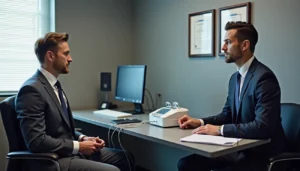
1.Pre-test Interview: Your examiner explains everything, answers questions, checks the equipment, and goes through all test questions with you. This longest phase helps you feel comfortable and less nervous [2].
2.In-test Phase: The sensors record your body’s responses while you answer standard questions about suitability and national security [1].
3.Post-test Discussion: Your examiner goes over early results and might ask follow-up questions [1]. A team of senior polygraph examiners makes the final pass-or-fail decision [2].
CBP runs 25 permanent testing sites across the country, and examiners can travel to other locations [2]. Testing sites now include San Antonio, Atlanta, and Portland, with San Juan coming soon – all places that draw lots of applicants [2].
Breaking Down the Three Phases of the Exam
The CBP polygraph test follows a well-laid-out three-phase process that creates a fair assessment environment. You’ll have a big advantage in your preparation when you know what happens at each stage of this critical evaluation.
Pre-test: What happens before the questions begin
Your four-hour examination mostly consists of the pre-test interview [2]. This original phase does more than just introduce you to the process. The examiner gives you a detailed explanation of the polygraph instruments and procedures [2]. They check if all equipment works properly and get your formal consent to move forward.
The examiner goes through each question you’ll face during the actual test [6]. You won’t face any surprises—they want you to feel ready and at ease with what’s ahead. This open approach builds trust and reduces anxiety by a lot, which helps both you and the examiner.
Many people don’t know that this phase has a practice test. You’ll get hands-on experience with the equipment before the real questions start. This lets you get used to how everything feels without any pressure.
In-test: How your responses are measured
The actual exam starts after the pre-test. You’ll be connected to biometric sensors that track your body’s responses as you answer standard questions [2]. The questioning happens in short 10-15 minute chunks instead of one long session [6].
Questions fall into two distinct categories:
- Suitability questions – These look into illegal drug use, involvement in serious crimes, and application falsification
- National security questions – These cover potential terrorist connections, unauthorized foreign contacts, and classified information handling [2]
The examiner asks similar questions multiple times to get enough data, while they record your body’s changes [6]. Don’t worry too much about being nervous – the examiners know the difference between normal anxiety and deception patterns.
Post-test: What comes after the questioning
The examiner shares early results with you in the post-test phase [6]. They might go over certain responses or ask you to clarify specific answers.
Remember that these early results aren’t final. A team of senior polygraph examiners will review your full exam results for quality control [2]. This detailed review usually takes a few weeks [7].
Your final results will be either pass, fail, or inconclusive. The examiner will explain why if you don’t pass [7]. You might need to come back later to address specific questions if your results are inconclusive [7].
What the Polygraph Really Tests For
The CBP polygraph looks beyond just wires and sensors. It wants to review your trustworthiness and integrity as a future law enforcement officer [6]. You’ll do better if you know what information they look for and prepare your responses accordingly.
Types of questions you may be asked
The CBP polygraph looks at two main areas: suitability concerns and national security threats [8]. Federal examiners can ask about your personal life, unlike private employers. They might ask about your religious beliefs, political connections, and social behaviors [9].
Typical questions you might encounter include:
- “Have you ever engaged in illegal drug use?”
- “Have you ever falsified information on your application forms?”
- “Have you ever committed a crime that went undetected?”
- “Have you ever been involved in any form of smuggling?”
- “Have you ever participated in any form of espionage against the U.S.?” [5]
These questions stay mostly the same across tests. Questions about unauthorized sharing of classified information with media outlets are a recent addition [9].
Drug use and criminal history disclosures
CBP has reportedly stopped asking about drug use during the polygraph test itself since January 2025 [4]. All the same, your e-QIP form must include any drug use from the last seven years [4].
CBP takes an all-encompassing approach to past drug use. They look at how often you used, how recently, what led to it, your age then, and proof that you won’t use illegal substances again [3]. Using marijuana, anabolic steroids, or misusing prescription drugs in the last two years, or other illegal drugs in the last three years, will disqualify you [6].
Many think candidates with any record don’t get selected. That’s not true – each case gets a thorough review by an independent adjudicator [6]. Past illegal drug use might be overlooked, but lying about your history won’t be accepted [1].
National security and foreign contact concerns
The national security section deals with potential terrorist activities, unauthorized contact with foreign nationals, and handling classified information [8]. This isn’t about finding someone perfect – they want to know if you have the integrity needed for federal law enforcement [6].
You might get asked if you’ve worked with groups trying to overthrow the U.S. government. Even current CIA Director John Brennan got this question during his screening and said yes [10]. In fact, honest answers, even concerning ones, could be acceptable if you’re truthful [10].
Note that information you share during any part of the test can make you ineligible for the job, whatever the polygraph results show [8]. Before 2016, CBP gave polygraph tests to candidates who had already shared disqualifying information, but that practice has likely changed [8].
How to Prepare and What to Bring

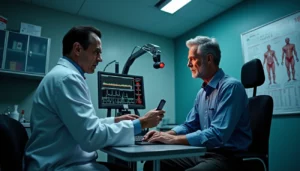
Image Source: Lie Detector Test
Your physical and mental readiness can make a big difference in your CBP polygraph experience. The exam usually takes four hours. You need both physical comfort and mental clarity to get through it successfully.
Sleep, food, and medication tips
Your regular routine matters a lot before test day. You should get 6-8 hours of sleep the night before to keep your mind sharp [11]. If you drink caffeine daily, keep doing it. A sudden stop can create extra stress in your body that might affect your results [11]. Make sure to eat a good breakfast on exam day [5]. Don’t take the test hungry – low blood sugar can make you sweat or give you a rapid heartbeat [12].
Take your prescribed medications just like you do every day [5]. This keeps your body balanced and stops unusual physical responses. You should talk to your doctor before changing any medication schedule, especially for blood pressure or anxiety [11].
What to wear and what to avoid
Pick business-casual clothes that you can sit in comfortably for hours [5]. Your clothing should:
- Fit well without being tight
- Let you add or remove layers as needed
- Work well with sensor placement
Pants or slacks work better than skirts during the long session [11]. Your physical comfort helps you stay calm and focused throughout the test.
How to mentally prepare for the exam
It’s perfectly fine to feel nervous – this won’t make you fail automatically [7]. The examiners know how to factor in nervousness during their evaluation.
You can ask your examiner questions beforehand, which helps many applicants feel more at ease [13]. Most of your time won’t be spent hooked up to the polygraph but talking during the pre-test phase [13].
Bring some snacks and water for breaks [5]. Set aside your whole day to avoid rushing [5]. The most important thing? Just tell the truth [13].
What Happens After the Exam
The polygraph test’s three phases lead to a significant post-examination process that will shape your CBP career future. You should know what this final stage involves to better manage your expectations while waiting for results.
Understanding your preliminary results
The examiner will share your preliminary results right after your examination ends. You’ll get immediate feedback about your performance and a chance to ask questions about the process [6]. Most applicants receive unfavorable results because they withhold information, don’t follow instructions, or listen to bad advice from others who claim they can “beat” the polygraph [6].
What to expect from the quality control review
Your preliminary results need further verification. A team of senior polygraph examiners at CBP conducts a detailed quality assurance review of your complete examination [2]. This quality control team verifies the test’s compliance with Federal and CBP polygraph standards [2]. The review process usually takes several weeks [7]. Your final results will fall into one of three categories:
- Pass: You continue to the next stage of the hiring process
- Inconclusive: You may be invited to retake certain portions of the exam
- Fail: You’ll need to wait before reapplying
Polygraph retest waiting period and next steps
Unsuccessful candidates must typically wait two years before they can retake the examination [14]. CBP’s staffing challenges partly stem from this mandatory waiting period [15]. Successful candidates receive notification to proceed with the next hiring stages [7], which usually include background investigation completion, physical testing, and drug screening [16].
Author’s Notes: Mastering the CBP Polygraph Challenge
As your author and lead content strategist, I’ve developed these notes to provide a high-level tactical extension to our guide on the Customs and Border Protection (CBP) polygraph. While the main article details the “what” of the process, this section is designed to give you the “how”—a clear-eyed look at the operational realities and high-stakes nature of this mandatory screening.
The Strategic Framework: A Four-Phase Operation
Phase Consolidation: Success depends on understanding the rigorous four-phase structure: the Pre-test Interview (procedural briefing), the Initial Interrogation (preliminary questioning), the Exam Phase (instrumentation), and the Post-test Interview (clarification of physiological spikes).
The Suitability Standard: Unlike criminal trials, this test is a dedicated “Suitability Assessment.” It is designed specifically to measure your ability to make sound decisions under extreme pressure and confirm your fitness for high-security roles.
Mandatory Requirements: Be aware that this is a non-negotiable hurdle for Border Patrol Agents, CBP Officers, and Air and Marine Interdiction Agents.
The Technical Reality: What is Being Measured
Galvanic Skin Response (GSR): Beyond breathing and blood pressure, expect a heavy focus on skin conductivity (sweat). These sensors are the primary physiological indicators examiners use to detect stress or deception.
Methodology Evolution: Understand that the scoring system and examiner training have undergone historical modifications since the 1980s. When reviewing standards, ensure you are referencing the most current scoring methodology.
Instrument Integration: The polygraph is just one tool; it is always integrated with a comprehensive background investigation and suitability assessment.
Tactical Preparedness for the Candidate
The “Sensitive Question” Mental Prep: You must be ready to discuss highly personal topics, including financial history, criminal background, drug use, and security loyalty.
Statistical Awareness: Do not be discouraged by the high failure rates. While anecdotal reports suggest a failure range of 10% to 50%, maintaining composure is your best defense against a “false positive” or inconclusive result.
Composure as a Metric: The examiner isn’t just looking for truth—they are evaluating your temperament. Demonstrating stability while being asked sensitive questions is part of the “suitability” being measured.
Policy and Long-Term Outlook
Requirement Stability: Despite ongoing public debate and calls for reform, there are currently no official plans to eliminate or change the polygraph requirement. It remains a cornerstone of the CBP’s competitive hiring process.
The Premium on Trust: In an agency where national security is at stake, the premium placed on absolute trustworthiness outweighs the technical controversies surrounding the machine itself.
Final Strategic Takeaway
The CBP polygraph is more than a lie detector; it is a stress test for your future career in federal law enforcement. By viewing the four phases as a consolidated operation and preparing for the specific “GSR” triggers of sensitive questioning, you can approach the examination with the professional detachment and honesty required to pass this competitive gateway.
Conclusion
The CBP polygraph test can feel scary at first, but knowing what it’s all about makes it much less intimidating. This four-hour test plays a key role in CBP’s steadfast dedication to hiring people with strong integrity for sensitive national security roles.
Good preparation will be your best friend for this challenge. You should get enough sleep before your appointment, stick to your usual medication schedule, and wear something comfortable for the long session. On top of that, it helps to know that being nervous won’t fail you – the examiners expect and plan for natural test anxiety.
The test has three phases – pre-test, in-test, and post-test. This setup helps you feel at ease while giving accurate information. Being completely open is your best strategy during the test. It’s better to be honest about your past actions, even the questionable ones, than to hide information.
CBP looks at candidates using an all-encompassing approach. This means they might overlook certain past mistakes based on the situation, how long ago they happened, and how you’ve improved since then. But lying at any point will likely get you disqualified with no chance to make it right.
The test might seem tough, but many people pass it each year. If you don’t make it the first time, you can try again after two years. This assessment helps both CBP and you – it lets CBP keep its high standards while helping you see if this career lines up with your background.
The polygraph is just one part of your trip toward a CBP career. It’s challenging, but with solid preparation, honest answers, and a clear understanding of the process, you’ll substantially boost your chances of success. With what you’ve learned in this piece, you can now take your test with more confidence and a better idea of what’s coming.
Key Takeaways
The CBP polygraph is a mandatory 4-hour examination that’s challenging but passable with proper preparation and complete honesty throughout the process.
• Honesty is your best strategy – Truthful disclosure about past actions, even concerning ones, is better than attempting to conceal information, which leads to automatic disqualification.
• Prepare physically and mentally – Get 6-8 hours of sleep, eat normally, continue prescribed medications, and dress comfortably for the lengthy session.
• Understand the three-phase structure – Pre-test builds rapport and reviews questions, in-test measures responses in short intervals, and post-test provides preliminary results.
• Know what’s being tested – The exam focuses on suitability (criminal history, integrity) and national security concerns (foreign contacts, classified information handling).
• Results undergo quality review – Initial results aren’t final; senior examiners conduct a comprehensive review that takes several weeks to complete.
• Two-year waiting period for retests – If unsuccessful, you must wait two years before retaking the examination, making thorough preparation crucial.
Remember that nervousness is normal and expected – examiners are trained to account for natural anxiety. The key is maintaining transparency while demonstrating the integrity CBP requires for sensitive national security positions.
FAQs
Q1. What is the typical duration of a CBP polygraph examination? A CBP polygraph exam usually lasts about four hours, though it can extend up to six hours depending on individual circumstances. The actual time connected to the polygraph device is only about 10-15 minutes at a time.
Q2. How can I best prepare for the CBP polygraph test? To prepare, get 6-8 hours of sleep the night before, maintain your regular medication routine, eat a nutritious breakfast, and wear comfortable business-casual attire. Most importantly, be honest throughout the entire process.
Q3. What types of questions are asked during the CBP polygraph? The exam focuses on two main areas: suitability questions about illegal drug use, serious crimes, and application honesty; and national security questions regarding potential terrorist connections, unauthorized foreign contacts, and handling of classified information.
Q4. What happens if I fail the CBP polygraph test? If you receive unfavorable results, you’ll typically need to wait two years before retaking the examination. The most common reasons for failing include withholding information, not following instructions, or attempting to “beat” the polygraph based on bad advice.
Q5. Is nervousness during the polygraph test a cause for concern? No, feeling nervous is entirely normal and won’t automatically cause you to fail. The examiners are trained professionals who take nervousness into account during the evaluation. Being honest is far more important than trying to control your nerves.
References
[1] – https://careers.cbp.gov/s/applicant-resources/suitability
[2] – https://www.oig.dhs.gov/sites/default/files/assets/2018-07/OIG-18-68-Jul18.pdf
[3] – https://careers.cbp.gov/s/applicant-resources/prior-drug-use
[4] – https://antipolygraph.org/blog/2025/01/13/cbp-drops-questions-about-illegal-drug-use-from-pre-employment-polygraph-screening/
[5] – https://liedetectortest.com/customs-and-border-protection-cbp/understanding-the-cbp-polygraph-exam-process
[6] – https://www.cbp.gov/newsroom/spotlights/uncovering-truth
[7] – https://morganpolygraph.com/index.php/2025/04/24/the-polygraph-exam-updated-jan-2025-cbp-hiring-process-cbp/
[8] – https://www.oig.dhs.gov/sites/default/files/assets/Mga/2017/oig-17-99-ma-080417.pdf
[9] – https://federalnewsnetwork.com/explainers/2018/08/to-tell-the-truth-how-federal-agencies-use-polygraphs-in-hiring-and-screening/
[10] – https://www.govexec.com/management/2018/12/what-you-need-know-taking-polygraph/153410/
[11] – https://cybersecjobs.com/polygraph-preparation-tips-mental-physical-strategies/
[12] – https://www.polytest.org/pre-polygraph-nutrition-guide/
[13] – https://www.ortsec.com/nervousness-and-the-polygraph-exam-what-you-should-know
[14] – https://careers.cbp.gov/s/applicant-resources/polygraph
[15] – https://delacruz.house.gov/uploadedfiles/cbp_-_polygraph_letter.pdf
[16] – https://www.reddit.com/r/borderpatrolapplicant/comments/10sviyj/passed_polygraph_what_to_expect_next/