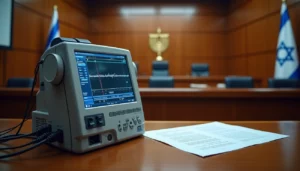
Most people don’t realize that about half of U.S. states don’t allow polygraph evidence in court proceedings. The rules around polygraph use in U.S. courts have changed by a lot since John Larson invented the device in 1921. Larson was a medical student and police officer at the University of California, Berkeley.
The legal system has placed major restrictions on polygraph evidence, despite its extensive history. The U.S. Supreme Court’s ruling in Frye v. United States back in 1946 set a precedent that would guide legal decisions for decades. These days, federal and state courts generally won’t accept polygraph results as evidence. The numbers show that all but one of these states reject polygraph tests as evidence in criminal trials. The American Psychological Association points out that polygraphs can measure physical responses like “heart rate/blood pressure, respiration, and skin conductivity,” yet they can’t actually detect if someone is lying.
This piece explores how courts handle polygraph evidence differently across states, from its early days to current practices. Federal courts have shown stronger opposition than state courts to allowing lie detector test results, largely due to scientific reliability concerns.
From years in the field and hundreds of real cases, this is my life’s work delivering the most up-to-date, expert-level guidance in the world.
The Origins of Polygraph Use in U.S. Law

Image Source: IEEE Spectrum
The polygraph’s experience in American legal history started a century ago and changed how law enforcement detected deception. A medical instrument would later become a controversial tool in courts and government agencies across the country.
John Larson Polygraph Invention in 1921
In 1921, John Augustus Larson transformed forensic science while working at the Berkeley Police Department in California [1]. He was the first American police officer with an academic doctorate in physiology. Larson built on existing blood pressure measurement techniques to create the first continuous-recording polygraph [1]. His device, which he called a “cardio-pneumo psychogram,” tracked blood pressure, heart rate, and breathing patterns on paper continuously [1].
Larson’s creation improved significantly on earlier attempts. His machine gave uninterrupted readings of multiple body signals, unlike William Moulton Marston’s earlier blood pressure test that took separate measurements [1]. The first real-world test happened in summer 1921 when Larson tested William Hightower, a murder suspect in San Francisco [1]. The press called it a “lie detector,” but Larson stayed realistic about what his invention could do [2].
A notable early success came when Larson questioned 38 female college students over 16 hours to find a shoplifter. This approach laid the groundwork for today’s relevant/irrelevant questioning method [2].
Frye v. United States 1923 and the ‘General Acceptance’ Test
The polygraph faced its first major legal challenge just two years after Larson’s invention. Frye v. United States, a landmark case in 1923, created a precedent that lasted almost 70 years [3]. The D.C. Circuit Court rejected polygraph evidence and ruled that scientific testimony needed “general acceptance” in its field [4].
This ruling created the “Frye Standard” or “general acceptance test” [5]. New scientific evidence needed widespread support from the scientific community before courts would accept it [5]. This requirement limited polygraph use in federal courts for decades [3].
The standard affected more than just polygraphs. It became a way to evaluate all scientific evidence, though courts rarely cited it until the 1970s [4]. Scientists didn’t need to agree unanimously – just enough of them had to accept the method [4].
Cold War Expansion of Polygraph Use in Federal Agencies
Federal agencies started using polygraphs more during the Cold War, mainly to screen employees rather than gather court evidence [3]. The federal government ran about 20,000 polygraph tests in 1963 alone for security checks and criminal cases [3].
The Department of Defense created directive 5210.48 in 1965. This document set clear testing procedures but emphasized that polygraphs should support other investigation methods, not replace them [3]. Usage dropped briefly in the 1970s but surged again under President Reagan [3]. His 1983 National Security directive 84 required certain federal employees to take polygraph tests when investigating classified information leaks [3].
Polygraphs became a key tool during the Cold War. Government agencies used them to identify potential Communist sympathizers and other security risks [6].
Federal Court Stance on Polygraph Evidence

Image Source: Quimbee
Federal courts have managed to keep their skeptical view of polygraph evidence throughout modern American legal history. This position has shaped how courts handle these controversial tests. Their decisions set precedents that guide courtroom practices today.
United States v. Scheffer 1998: Blanket Exclusion Upheld
The Supreme Court’s landmark ruling in United States v. Scheffer in 1998 became a turning point for polygraph admissibility. The highest court addressed polygraph evidence directly for the first time [7]. The case challenged Military Rule of Evidence 707, which banned all polygraph evidence in court-martial proceedings [1].
The case began with Airman Edward Scheffer, who faced charges of using methamphetamines after a positive urinalysis. He tried to present results from a Department of Defense polygraph that showed he had truthfully denied knowing about drug use [2]. The military judge rejected this request based on Rule 707. The case made its way to the Supreme Court, which had to decide if this complete ban violated Scheffer’s constitutional right to defend himself [6].
The Court upheld Rule 707 in an 8-1 decision. They ruled it didn’t violate military defendants’ constitutional right to present evidence [8]. Justice Thomas wrote for the majority: “There is simply no consensus that polygraph evidence is reliable: The scientific community and the state and federal courts are very divided on the matter” [6]. The Court also confirmed that keeping unreliable evidence out serves legitimate government interests and helps ensure only dependable evidence reaches the trier of fact [6].
Permissible Uses: Bail, Sentencing, and Probation Hearings
Courts allow polygraph evidence in specific situations despite the general ban. The 1998 Supreme Court decision didn’t affect using polygraph results in pre-trial proceedings for bail decisions [9]. These tests remain useful tools in probation and parole violation hearings [10].
Courts have tackled five key issues about polygraph conditions during supervision: the extent of defendant’s consent as a waiver of illegality claims, whether conditions meet standard probation tests, self-incrimination rights in probation, consequences of refusing tests, and whether failed tests alone can justify revocation [10].
Discretionary Admissibility with Mutual Consent
Federal circuit courts take different approaches to polygraph admissibility. They fall into four groups: complete exclusion, admission with both parties’ agreement, right to admit upon agreement, and admission at the judge’s discretion [7].
The Second, Fourth, Tenth, and DC Circuits ban polygraphs whatever the circumstances [7]. The Sixth, Eighth, and Eleventh Circuits let them in if both sides agree before testing and the judge finds they meet Federal Rules of Evidence requirements [7]. The Eleventh Circuit takes a broader view and allows polygraph evidence to challenge or support testimony even without prior agreement [7].
Some federal judges have allowed polygraph evidence in special cases. A Middle District of Florida judge let a defendant share polygraph results from a former FBI agent to back up testimony [5]. The judge used the Daubert standard and found the evidence met the three requirements for expert testimony [5].
This mix of approaches creates a complex situation where courts might treat the same polygraph evidence differently based on location. This adds another layer of complexity to an already debated area of evidence law.
State-by-State Polygraph Admissibility Rules
U.S. states have different and often conflicting laws about using polygraph evidence in courtrooms. These laws create a complex pattern that varies from one state to another.
States That Allow Conditional Admissibility
New Mexico stands alone and lets courts admit polygraph evidence without requiring parties to agree [4]. About 15 states allow polygraph results in trials, but only after all parties agree before the test [4].
Ohio shows this conditional approach through its State v. Souel decision. The ruling created four key requirements: (1) prosecutor, defendant, and defense counsel must sign a written agreement; (2) judges can reject results if the examiner lacks proper skills or test conditions were wrong; (3) opposing counsel can question the examiner; and (4) juries must understand that polygraph evidence neither proves nor disproves any part of the crime [11].
Summit County’s Common Pleas Court made history in State v. Sharma (2007). The court allowed polygraph evidence without prior agreement, noting the “most important advances in polygraph technology” [11].
States That Fully Prohibit Polygraph Evidence
About half of U.S. states ban polygraph evidence in court. These states use the “per se exclusion rule” and reject polygraph results whatever the situation [11]. Even in these states, polygraph tests can affect pre-trial talks or investigations without becoming court evidence.
Federal courts also ban polygraph evidence most of the time, unless the court decides otherwise. The 11th Circuit Court differs by banning polygraph evidence without exception [4].
Licensing and Examiner Experience Requirements in Some States
Twelve states have official polygraph examiner licensing boards that control examiners’ qualifications and ethics [12]. Alabama, Arkansas, Illinois, Kentucky, Louisiana, Maine, Mississippi, Missouri (St. Louis County only), Texas, and Virginia are among these states [12].
Each licensing board sets its own rules for training, education, and testing methods. Texas’s Polygraph Examiners Board demands strict standards to ensure examiners are competent [12].
Different licensing requirements highlight a basic problem with polygraph evidence – “test quality depends on the examiner’s skill when there are no standard training and license rules” [4]. This lack of uniform qualifications adds to the ongoing debate about using polygraph evidence in courts nationwide.
Scientific and Legal Challenges to Polygraph Reliability
Scientific controversy over polygraph reliability undermines their legal standing in courtrooms. Research spanning 50 years shows no major breakthroughs in detecting deception [13]. U.S. courts still struggle to establish consistent rules because of this limitation.
Polygraph Accuracy Debate: No Consensus on Error Rates
The scientific community cannot agree on how reliable polygraphs are. A groundbreaking National Research Council report shows polygraph accuracy ranges between 81-91%—”well above chance, though well below perfection” [14]. This accuracy rate becomes a big deal as it means that security screening has error rates of 10-20% [14]. Different testing formats produce varying results, and single-issue tests prove more accurate than multiple-issue screening examinations [14].
False positives are at the heart of this accuracy debate. Many courts reject polygraph evidence because the comparison question test, which many jurisdictions still use, produces high false positive rates [13].
Lack of Standardized Testing Protocols Across Jurisdictions
Inconsistent testing methods create a major roadblock to polygraph reliability. Six different testing formats exist now—including relevant-irrelevant tests, various comparison question techniques, and directed-lie tests [15]. Different U.S. government agencies use their own unique protocols [16].
These protocols lack consistency in practice. Federal agencies do not follow standard examiner training or testing conditions [16]. This creates a patchwork of methods that makes scientific evaluation difficult.
Subjectivity in Examiner Interpretation of Physiological Data
The most concerning issue is that 65% of polygraph test responses need “special questioning techniques, careful study, and expert interpretation” [17]. Results vary because examiners must analyze unclear physiological data based on their judgment.
This interpretive element creates a logical loop: real-world applications cannot verify “ground truth” [18]. Examiner conclusions amount to “nothing more than a subjective, unverifiable suspicion” [18]. Yet these same conclusions help evaluate polygraph effectiveness. Courts view polygraphs with growing skepticism because of this fundamental flaw, though specific contexts still use them.
Contexts Where Polygraphs Are Still Used
Polygraph examinations still play important roles in American society, despite many court restrictions. These controversial tools remain valuable in specific situations where people accept their limitations or see their benefits outweigh the drawbacks.
Military Court Proceedings and Branch-Specific Rules
The U.S. military takes a firm position on polygraph use in courts-martial. Military Rule of Evidence 707 does not allow polygraph results, examiner opinions, or any mention of test-taking during trials [6]. The Supreme Court backed this complete ban in United States v. Scheffer. The court worried about reliability and how these tests might interfere with jurors who should be the real “lie detectors.” Military courts reject polygraphs as scientifically unreliable, even when both parties agree to use them [19].
Probation and Parole Violation Hearings
Courts now use polygraphs extensively in post-conviction monitoring, though they don’t accept them as trial evidence. Most jurisdictions rely on these tests to check if sex offenders follow their probation rules [20]. Some areas have started using them for domestic abuse and drunk driving cases too [20]. The results can be striking. A 2000 study of 180 sex offenders showed that admissions of male victims rose from 10% to 36% after testing [20]. Courts now order more than a thousand tests each year [21]. Most probationers take these maintenance polygraphs every six months to show they’re following their treatment programs [22].
Pre-employment Screening and Security Clearance Evaluations
The Employee Polygraph Protection Act (EPPA) stops most private companies from using polygraphs when hiring [3]. However, security service firms, pharmaceutical companies, and businesses investigating workplace theft can still use them [3]. Many federal agencies require polygraph tests before hiring, including the FBI, CIA, DEA, Secret Service, NSA, U.S. Marshals, Border Patrol, and Homeland Security [23]. These tests help determine if someone can be trusted with sensitive information [24]. The National Reconnaissance Office requires everyone to pass a counterintelligence polygraph [25]. Law enforcement agencies use these tests frequently – about 62% include them in hiring, and they reject roughly 25% of applicants based on what the tests reveal [26].
Author’s Notes: Strategic Insights into U.S. Polygraph Admissibility
As an author and content strategist, I’ve curated these notes to serve as a high-level tactical extension of our guide. While the main article details the history and general stance of the American judicial system, this section provides the “boots-on-the-ground” perspective necessary for legal professionals and individuals to navigate the complex, often inconsistent use of polygraphs in the United States. 1
The Core Legal Reality: Discretion and Exceptions
The “No” is Nuanced: While polygraphs are rarely admissible in criminal trials, they are not universally banned; the legal story is one of complex exceptions and lower-court discretion.
Constitutional Leverage: Under United States v. Scheffer (1998), a blanket federal ban is considered unconstitutional, though general prohibition remains the prevailing policy.
The Discretionary Opening: Lower federal courts maintain the authority to admit polygraph evidence under specific, narrow circumstances.
Pre-Trial Utility: Polygraphs are frequently used in non-trial settings, such as evaluating pre-trial bail, sentencing, and determining risk factors for security clearances.
Navigating the State-by-State Patchwork
A Divided Landscape: The U.S. is split almost exactly in half, with roughly 25 states allowing partial results and 23 states maintaining general ineligibility.
The Power of Consent: In federal courts and states like New Mexico, polygraph results can often be admitted if both the prosecution and defense provide mutual agreement.
State-Specific “Compromise Rules”: Many states have moved toward “compromise rules” that restrict rather than ban use—for instance, requiring an examiner to be licensed with at least 5 years of experience.
Jurisdictional Nuance: Be mindful of specific local restrictions; for example, Ohio permits polygraphs in civil lawsuits but bars them in criminal cases, while Massachusetts prohibits them entirely.
Tactical Defense and Trial Strategies
The “Proof of Performance” Tactic: Strategically use polygraph evidence not to claim absolute “truthfulness,” but as procedural proof that an examination was actually performed during an investigation.
Expert Credibility Debates: Consider a trial approach where opposing expert witnesses debate polygraph reliability directly before a jury to influence the weight given to the findings.
Challenging Subjectivity: Use the current lack of standardization and the subjectivity of result interpretation as grounds to challenge an opponent’s polygraph data.
Probation and Parole Risks: In specific jurisdictions, a failed polygraph is treated as a direct violation of probation terms, highlighting the high stakes in post-conviction monitoring.
Institutional and Private Sector Applications
Private Sector Flexibility: Private companies enjoy much more flexibility in using polygraphs for pre-employment screening, as these environments are significantly less regulated than criminal courts.
Military Variation: If a case involves military trials, always verify the specific branch’s rules, as standards of evidence vary between different branches of the service.
The Future of Accuracy: Watch for incremental changes in admissibility as research into AI-powered sensors and standardized testing procedures continues to evolve.
Professional Standards for Examiners
License and Certification: Even in jurisdictions where licensing is not required, always verify an examiner’s qualifications, training, and voluntary certifications to establish quality control.
The Reliability Standard: Always anchor your expectations in the “general acceptance” test established by Frye v. United States (1946), which continues to influence how courts view scientific reliability today.
Final Strategic Takeaway
In the United States, the polygraph is a tool of limited but potentially high-impact utility. Your success in using or challenging this technology depends on identifying the specific evidentiary standards of your jurisdiction and understanding that while a jury’s role is protected, the “door is left open” for those who know how to navigate the exceptions. 19
Conclusion
Polygraph testing stands as one of the most debated evidence tools in the American legal system. This piece shows how these “lie detectors” sit in a tricky spot – they see widespread use but face legal restrictions. The technology has evolved since John Larson’s 1921 invention, but polygraphs still face core challenges that limit their use in courtrooms.
Federal courts have managed to keep their skeptical stance on polygraph evidence, especially after the landmark 1998 Scheffer decision that backed blanket exclusions. All but one of these states completely ban polygraph results, while others allow them under strict conditions with mutual agreement. This mixed bag of rules points to deeper scientific doubts about how reliable polygraphs really are.
The accuracy debate continues because polygraph tests measure stress responses, not deception itself. So innocent people with anxiety disorders often show false positives, while skilled liars can learn ways around the test. These flaws explain why courts hesitate to accept evidence that could be wrong up to 20 percent of the time.
The biggest problem is that polygraphs create a false sense of scientific certainty in detecting lies. Unlike DNA evidence or fingerprint analysis, polygraph results depend heavily on the examiner’s judgment – a subjective element that doesn’t hold up under scientific review. Courts make the right call when they let human jurors, not machines, decide who’s telling the truth.
Polygraphs still serve a purpose in specific settings where people understand their limits. Law enforcement uses them during investigations to provoke confessions. On top of that, probation departments find them helpful for monitoring compliance, especially when you have sex offenders. These uses treat polygraphs as behavioral tools rather than truth-finding machines.
The future might bring better options through neuroscience technologies like functional magnetic resonance imaging (fMRI) and electroencephalography (EEG). These methods measure brain activity directly instead of physical responses. But they face many of the same legal and ethical challenges that have restricted polygraph use for decades.
The legal position on polygraph evidence reflects a basic principle of American law – scientific evidence must meet strict reliability standards before it can affect important court decisions. Until polygraph technology overcomes its basic flaws, courts will likely stick to their careful approach with these controversial “truth machines.”
Key Takeaways
Despite a century of use since 1921, polygraph evidence faces significant legal restrictions due to reliability concerns and scientific limitations that courts refuse to overlook.
• Federal courts generally prohibit polygraph evidence after the 1998 Scheffer ruling, with only limited exceptions for bail, sentencing, and probation hearings.
• Roughly half of U.S. states completely ban polygraph results in court, while others allow them only with mutual consent from all parties.
• Polygraph accuracy rates of 81-91% still produce unacceptably high error rates of 10-20%, especially problematic for innocent defendants with anxiety.
• Examiner subjectivity in interpreting physiological data undermines scientific reliability, as 65% of test responses require “expert interpretation” rather than objective analysis.
• Polygraphs remain widely used outside courtrooms for probation monitoring, security clearances, and law enforcement investigations where their limitations are acknowledged.
The fundamental issue isn’t technological—it’s that polygraphs measure stress responses rather than actual deception, creating a dangerous illusion of scientific certainty that courts wisely reject in favor of human judgment.
FAQs
Q1. Are polygraph results generally admissible as evidence in U.S. courts? Polygraph results are generally not admissible as evidence in most U.S. courts. Federal courts and about half of the states prohibit polygraph evidence entirely, while some states allow it only under specific conditions with mutual consent from all parties involved.
Q2. When did polygraph evidence become largely inadmissible in court? The inadmissibility of polygraph evidence in U.S. courts has evolved over time, but a significant turning point came in 1998 with the Supreme Court’s ruling in United States v. Scheffer. This decision upheld the military’s blanket ban on polygraph evidence and reinforced skepticism towards its use in courtrooms.
Q3. Why are courts skeptical about admitting polygraph evidence? Courts are skeptical due to concerns about polygraph reliability and accuracy. Scientific studies show error rates of 10-20%, which is considered too high for courtroom use. Additionally, the subjective interpretation of results by examiners and lack of standardized testing protocols across jurisdictions contribute to this skepticism.
Q4. In what contexts are polygraphs still commonly used? While restricted in courtrooms, polygraphs are still widely used in probation and parole violation hearings, especially for monitoring sex offenders. They’re also used in pre-employment screening for certain government agencies and security firms, and in military contexts outside of court-martial proceedings.
Q5. How accurate are polygraph tests? Studies suggest polygraph accuracy falls between 81-91%, which is above chance but far from perfect. This level of accuracy is considered insufficient for courtroom evidence, especially given the high stakes in criminal trials. The accuracy can vary depending on the specific testing format used and the skill of the examiner.
References
[1] – https://www.justice.gov/archives/jm/criminal-resource-manual-262-polygraphs-introduction-trial
[2] – https://www.quimbee.com/cases/united-states-v-scheffer
[3] – https://www.dol.gov/agencies/whd/polygraph
[4] – https://spinella-law.com/pg/blog/January-2019.php
[5] – https://www.centrallaw.com/blog/lie-detector-polygraph-admissible-court/
[6] – https://supreme.justia.com/cases/federal/us/523/303/
[7] – https://www.afjag.af.mil/Portals/77/documents/AFD-081204-036.pdf
[8] – https://opd.ohio.gov/law-library/criminal-law-casebook/polygraph
[9] – https://jjie.org/2024/05/06/mostly-banned-from-adult-courts-polygraphs-also-shouldnt-be-used-against-juveniles/
[10] – https://www.ojp.gov/ncjrs/virtual-library/abstracts/use-polygraph-condition-probation-or-parole-0
[11] – https://www.rittgers.com/blog/2016/07/polygraph-examinations-are-they-admissible-in-court/
[12] – https://www.polygraph.org/state_licensing_boards_assoc.php
[13] – https://www.sciencedirect.com/science/article/abs/pii/S030105112400067X
[14] – https://jaapl.org/content/38/4/446
[15] – https://www.nationalacademies.org/read/10420/chapter/12
[16] – https://federalnewsnetwork.com/explainers/2018/08/to-tell-the-truth-how-federal-agencies-use-polygraphs-in-hiring-and-screening/
[17] – https://www.ojp.gov/ncjrs/virtual-library/abstracts/interpretation-truth-and-deception-polygraph-test-records
[18] – https://pmc.ncbi.nlm.nih.gov/articles/PMC11225010/
[19] – https://www.armfor.uscourts.gov/digest/IIIC21.htm
[20] – https://www.abajournal.com/news/article/probationer_polygraphs_increasingly_used_to_find_parole_violations
[21] – https://www.quora.com/Can-a-probation-officer-demand-a-lie-detector-test-on-an-offender-on-probation
[22] – https://www.justanswer.com/criminal-law/ojm1m-probation-compliant-treatment-counselor.html
[23] – https://www.executiveprotectiongrp.com/blog/pre-employment-polygraph-testing
[24] – https://www.militaryandnclawyer.com/blog/role-of-polygraphs-in-security-clearances
[25] – https://www.intelligencecareers.gov/nro/security-clearance-process
[26] – https://polygraph.org/docs/pre-employment_polygraph_screening1.pdf