
Time is critical if you need to file a missing persons report, especially if you have vulnerable people involved. Many believe they must wait before reporting someone missing – this is false. Police departments cannot enforce any waiting period before accepting reports about missing children according to federal law. Law enforcement must add the child’s information to the FBI’s National Crime Information Center Missing Person File within two hours after receiving the report.
State laws and specific situations determine the timeline to adults. The National Crime Information Center (NCIC) requires immediate posting of information about missing adults aged 18 to 21 in Ohio. Adults over 21’s cases must be posted within seven days if authorities suspect foul play, or up to 30 days without such suspicion. The NCIC database is a vital nationwide tool that connects all U.S. police agencies to missing persons information. This piece explains the complete process to file a missing persons report and provides templates and strategies that ensure law enforcement gives your case proper attention.
Contact Law Enforcement to File a Report
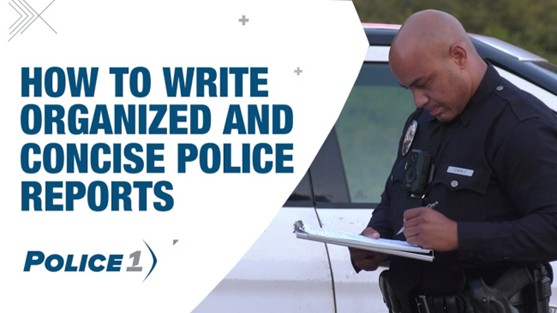
Image Source: Police1
Call your local police department right away if you notice someone is missing. Law enforcement starts investigating the moment you contact them, so quick action is vital.
What information you need to provide
You need this key information to file a missing persons report:
- Missing person’s full name, date of birth, and social security number
- Detailed description of where they were last seen or heard from
- Information about any vehicles potentially involved
- Names and details of people who may be with the missing person
- Description of what the person was wearing at the time
- Details about unique physical characteristics or speech patterns
- A recent, high-quality photograph (preferably front and side views)
- Dental records or dentist contact information
You should also write down the name, badge number, and contact details of the officer handling your report. Ask for a copy of the filed report and keep the case number handy [1].
How long do you have to wait to file a missing persons report?
In stark comparison to this common belief, no waiting period exists to report someone missing. TV shows and movies created this dangerous “24-hour rule” myth. No law enforcement agency in the United States can make you wait [2].
Maryland authorities receive more than 10,000 missing persons reports annually[3]. Police departments know they must act fast, especially when you have vulnerable people like children, elderly individuals, or those needing medical care.
What happens when you file a missing persons report?
https://youtube.com/shorts/M4j01x6L2iE
Police gather all available information and begin investigating after you file a report. While the official report starts the process, they might not launch an active investigation without evidence of foul play [4].
Your investigating officer should add the missing person’s information to the . This step lets all federal, state, and local law enforcement agencies access case details nationwide National Crime Information Center (NCIC) database[1].
Officers might ask you to reach out to the missing person’s friends, family members, and workplace colleagues. They could also secure potential crime scenes and gather evidence like security camera footage [5].
How to ensure NCIC database entry
Ask the officer if they’ve entered your loved one’s information into the NCIC database. This system helps law enforcement agencies share and search information instantly [6].
Federal law requires immediate NCIC entry for missing children under 21 [7]. Requirements vary by state for adults over 21. Ohio law mandates entry within seven days if foul play seems likely, or within 30 days otherwise [1].
NCIC database organizes missing persons records into specific codes: disability, endangered, involuntary, or juvenile. Each category follows different retention policies and search capabilities [6].
When can you file a missing persons report legally?
You can file a missing persons report as soon as you think someone has disappeared. File with the law enforcement agency where the person was last seen or lives [7].
Anyone can report an adult missing, though some agencies prefer family members to file the report [1]. Parents, guardians, or concerned individuals who know about a child’s disappearance can file reports for minors.
Note that police might not share an adult’s location without permission if they left voluntarily [8]. Filing a report still ensures law enforcement will confirm the person’s safety.
Submit a Complete and Accurate Missing Persons Report Form
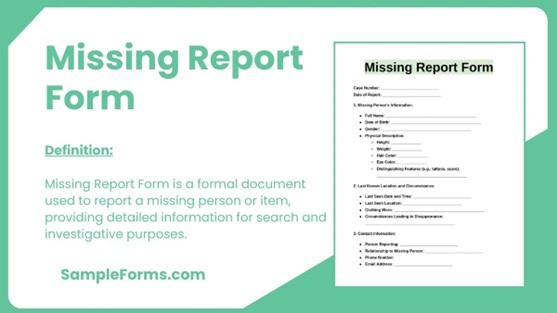
Image Source: Sample Forms |
The accuracy and completeness of your missing persons report form is the foundation of a successful investigation. Law enforcement agencies use standardized forms to gather key information that will help locate the missing individual.
Use a missing persons report template to stay organized
Law enforcement agencies employ instead of just verbal information. This will give a consistent way to capture all critical details. These templates has sections for personal information, physical characteristics, circumstances of disappearance, and contact details structured missing persons report templates[9]. Some agencies also provide checklists that guide investigators through key steps in the original phase of the investigation [10].
You should prepare your own documentation before going to the police station. This preparation helps you remember all important details during what is without doubt a stressful situation.
Include physical description, last known location, and known associates
Your report needs detailed identifying information that includes:
- including height, weight, eye color, hair color/style, and identifying features like scars, tattoos, or birthmarks Complete physical description[11]
- Clothing and accessories the person was last seen wearing
- Any medical conditions, required medications, or disabilities that might affect the person’s wellbeing [12]
- Last known location with date and time [13]
- Names and contact information of known associates who might have information [12]
- Places the missing person frequently visits [11]
The investigating officer will need details about any vehicles involved. This includes make, model, color, and license plate number [14]. These specifics help agencies categorize the case and determine appropriate resources.
Attach recent photographs and medical records
Visual identification tools boost search efforts by a lot. Law enforcement will ask for:
- Recent, clear photographs showing the person’s face from different angles [11]
- Digital copies whenever possible (some agencies can distribute electronic images nationwide) [15]
- Videos that capture the person’s appearance, mannerisms, and voice [15]
You should provide items that could help with DNA analysis if needed, not just photos. A toothbrush, hairbrush, or undergarments recently used by the missing person would be helpful [16]. Handle these items minimally to preserve potential evidence.
Medical and dental records are vital identification tools. Law enforcement may ask for release forms to access these records [17]. Dental x-rays can be crucial for identification in challenging cases.
Request a copy of the report and case number
Ask for a physical copy of the completed report and the assigned case number [1]. This documentation lets you:
- Follow up effectively with additional information
- Provide the case number when contacting other agencies or organizations
- Verify that the information has been properly entered into relevant databases
Make sure the case information goes into the National Crime Information Center (NCIC) database [1]. This vital step lets all federal, state, and local law enforcement agencies nationwide access information about your missing loved one.
Assist Investigators with Follow-Up Actions
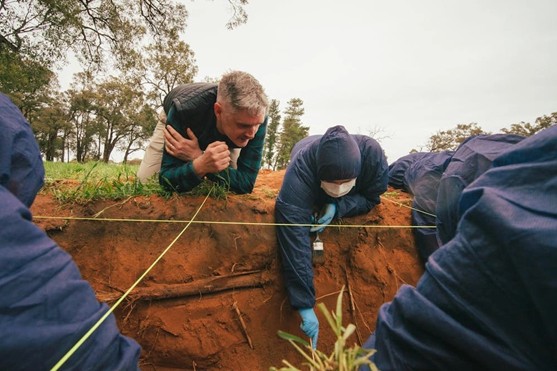
Image Source: The Conversation
Your active involvement plays a vital role in finding your missing loved one after filing a report. Law enforcement needs your support and follow-up actions to increase the chances of locating the person.
Preserve the missing person’s environment and belongings
The last known location of the person could be a potential crime scene with valuable evidence. Do not clean, alter, or rearrange anything in this area [5]. You should take photographs of the location but avoid touching or moving objects [5]. The area needs limited access to keep potential evidence intact.
Law enforcement might need to secure the premises as part of their protocol [10]. They will search this location carefully to confirm the person is missing and search for signs of foul play or missing belongings [10].
Provide access to digital records and phone logs
Digital footprints often give investigators valuable leads. Investigators need access to:
- Cell phone records and device information
- Social media account credentials and history
- Email accounts and communication records
- Computer files and browsing history
Personal electronic devices hold valuable location data and communication records that show the person’s movements or contacts before disappearing [18]. Social media accounts can reveal information about possible locations and connected people [18].
Share DNA samples or personal items for identification
Law enforcement must tell family members about their right to provide after filing a report voluntary DNA samples within 30 days[3]. DNA samples help identify missing persons, and many agencies now organize DNA collection drives [19].
You can provide these items for DNA collection:
- Direct samples from the missing person (toothbrush, hairbrush, or medical samples) [8]
- Biological samples from close family members (parents, siblings, children) [8]
- Personal items with the missing person’s scent for search dogs [18]
Dedicated databases store DNA profiles from family members separately from criminal records [8]. These profiles help match against unidentified remains through advanced matching systems like I-Familia[8].
Maintain regular communication with law enforcement
Investigators should stay in touch with the missing person’s closest relatives during the investigation [20]. You need to follow up with investigators regularly. Officers usually contact the reporting party again within 30 days to gather new information [3].
The coroner or medical examiner might compare dental records, X-rays, and other identification materials with unidentified deceased persons if the person remains missing after 45 days [3]. Remember to document the names of officials you talk to and keep records of all communications.
Raise Public Awareness Without Compromising the Case

Image Source: Venngage
Someone recognizing a photo helps find 1 in 6 missing children[21]. Public awareness makes a huge difference in locating missing people. Success depends on carefully balancing publicity with case integrity.
Create and distribute a missing person poster
A well-designed missing person flyer needs key details that grab attention:
- Two clear, recent photographs
- Full name (first name might work better to protect privacy)
- Physical description with height, weight, and unique features
- Last known location and date
- Investigator contact details (avoid personal phone numbers)
- Vehicle information when relevant [22]
Your original focus should target printed posters in busy areas like supermarkets, transport hubs, and hospitals. Members of Parliament and Officeworks locations usually print these posters without charge [4].
Use social media and local media outlets strategically
Social media has become a game-changer in finding missing people [23]. You should be careful about sharing online. The best approach might be waiting 48 hours before posting online when cases could resolve quickly [4]. You’ll need to watch and remove any comments that might upset returning individuals.
Coordinate with national registries like NamUs and NCMEC
The National Missing and Unidentified Persons System (NamUs) stands out as the only national database that gives limited public access [24]. with medical examiners and families while checking FBI databases automatically NamUs connects law enforcement[24].
Cases involving juveniles need NCMEC’s help. The National Center for Missing & Exploited Children offers specialized resources and helps coordinate AMBER Alerts [25].
Ask law enforcement what information can be shared
Law enforcement should approve case details before public sharing. Some information might hurt investigations or breach privacy. You should be extra careful when you have sensitive medical details or circumstances about the disappearance [23].
Protect Yourself and Avoid Common Pitfalls
Life after filing a missing persons report can leave you exposed to people who might take advantage of you. You should prepare yourself and stay watchful to avoid more trauma.
Beware of scams from private investigators or psychics
Criminals often prey on vulnerable families of missing persons. Watch out for about your loved one who ask for money in return. Some criminals pretend to be kidnappers who ask for ransom. Others might say your missing family member is being trafficked and can be “bought back” scammers claiming to have information[26]. Even mail-based “recovery bureaus” that promise leads usually ask for big payments for fake information [26].
Set boundaries for media interviews
Get ready before you talk to media outlets. Pick specific times and places for interviews so you retain control [27]. Note that finding your missing loved one is your only priority, not answering every media question [6]. Don’t criticize law enforcement in public, even if reporters push you to create controversy [6]. Above all, check with investigators about what details should stay private to protect the case [6].
Seek emotional and legal support from professionals
Your wellbeing matters during this difficult time. Talk to your doctor about handling the emotions you might feel – anxiety, sadness, guilt, anger, fear – when someone goes missing [28]. as you deal with complex systems. Lawyers can work effectively with law enforcement to get meetings, returned calls, and build relationships that help the search Legal representation is a great way to get help[29]. Their expertise helps direct both families and agencies toward the right steps to find missing persons [29].
Conclusion
Quick action and good preparation are essential when filing a missing persons report. You don’t have to wait any specific time before filing – time is the most important factor, especially if vulnerable people are involved. Your chances of finding your loved one will improve by a lot through detailed documentation, consistent follow-up, and smart public awareness efforts.
The National Crime Information Center database is the foundation of nationwide missing persons investigations. Make sure your case has been entered correctly into this system. DNA samples, digital records, and preserving evidence are vital ways to support professional investigators.
Public awareness campaigns should strike the right balance. They should create attention without putting the case or your privacy at risk. Work closely with law enforcement before making sensitive details public.
Technology has transformed how missing persons cases are handled, and new tools bring more hope. Facial recognition software, genetic genealogy, and specialized search algorithms have helped reunite families after decades apart. Crowd-sourced intelligence platforms also let civilians help with investigations while professionals maintain case integrity.
Your emotional wellbeing matters most during this challenging experience. Getting help from legal experts and mental health professionals will give you the strength you might need for a long search. Your careful preparation, ongoing support, and teamwork with authorities are the foundations to handle this tough situation and bring your loved one home safely.
Key Takeaways
Filing a missing persons report requires immediate action and thorough preparation to maximize the chances of locating your loved one safely.
- No waiting period exists – You can file a missing persons report immediately; the “24-hour rule” is a dangerous myth that delays critical search efforts.
- Ensure NCIC database entry – Verify law enforcement enters your case into the National Crime Information Center within required timeframes for nationwide visibility.
- Prepare comprehensive documentation – Gather recent photos, physical descriptions, medical records, and digital access information before contacting police.
- Preserve potential evidence – Don’t clean or alter the missing person’s environment; provide DNA samples and personal items to assist identification efforts.
- Coordinate public awareness carefully – Create missing person posters and use social media strategically, but consult investigators about what information to share publicly.
- Protect yourself from exploitation – Beware of scammers posing as private investigators or demanding ransom payments; seek professional legal and emotional support.
The key to a successful missing persons case lies in swift reporting, meticulous documentation, and maintaining active collaboration with law enforcement while protecting your own wellbeing throughout the process.
FAQs
Q1. How quickly can I file a missing persons report? You can file a missing persons report immediately. There is no mandatory waiting period, and it’s crucial to contact law enforcement as soon as you believe someone is missing.
Q2. What information should I include in a missing persons report? Include the person’s full name, date of birth, physical description, last known location, recent photographs, and any relevant medical information. Also provide details about their clothing, vehicles, and known associates.
Q3. How can I ensure my missing persons case gets national attention? Verify that the case is entered into the National Crime Information Center (NCIC) database. This allows law enforcement agencies nationwide to access the information. You can also register with national organizations like NamUs and NCMEC.
Q4. Should I use social media to spread awareness about a missing person? While social media can be helpful, use it strategically. Consult with law enforcement before sharing case details publicly to avoid compromising the investigation. Focus on sharing approved information and recent photographs.
Q5. How can I protect myself from scams when dealing with a missing persons case? Be wary of individuals claiming to have information in exchange for money. Avoid sharing sensitive details publicly and be cautious of unsolicited offers from private investigators or psychics. Seek support from reputable organizations and maintain close communication with law enforcement.
References
[1] – https://sites.google.com/scopeacademy.org/main/parent-handbook/how-to-file-a-missing-person-report
[2] – https://www.lincolnpark.org/FAQ.aspx?QID=91
[4] – https://www.missingpersonsguide.com/making-posters/
[5] – https://www.cdatribe-nsn.gov/ss/missing-persons/
[6] – https://ojjdp.ojp.gov/sites/g/files/xyckuh176/files/pubs/childismissing/ch3ck.html
[7] – https://www.dps.texas.gov/internetforms/forms/mp-14.pdf
[8] – https://www.interpol.int/en/How-we-work/Forensics/I-Familia
[9] – https://post.ca.gov/portals/0/post_docs/publications/Missing_Persons_Forms/mp_report.pdf
[10] – https://www.theiacp.org/sites/default/files/2021-12/Missing%20Persons%2012-2021%20to%20publish.pdf
[11] – https://www.hialeahfl.gov/853/Report-a-Missing-Person-Information
[12] – https://www.lvmpd.com/services/missing-persons/adults
[13] – https://www.shawu.edu/wp-content/uploads/2024/06/mlso_missing_person_initial_rpt_f_i.pdf
[14] – https://www.rcmp-grc.gc.ca/en/news/2023/best-practices-reporting-a-missing-person
[15] – https://ojjdp.ojp.gov/sites/g/files/xyckuh176/files/pubs/childismissing/ch4.html
[16] – https://directives.chicagopolice.org/forms/CPD-11.351.pdf
[17] – https://www.wasecacounty.gov/DocumentCenter/View/9440/314-Missing-Persons
[18] – https://post.ca.gov/Portals/0/post_docs/publications/Missing_Persons_Guidelines2024_NEW3.pdf
[19] – https://www.wired.com/story/dna-drives-help-identify-missing-people-its-a-privacy-nightmare/
[20] – https://www.theiacp.org/sites/default/files/2018-08/MissingPersonsPolicy.pdf
[21] – https://oag.ca.gov/missing
[22] – https://www.niwrc.org/resources/template/missing-person-flyer
[24] – https://namus.nij.ojp.gov/what-namus
[25] – https://www.justice.gov/action-center/report-and-identify-missing-persons
[27] – https://ojjdp.ojp.gov/sites/g/files/xyckuh176/files/pubs/childismissing/ch3.html
[28] – https://www.missingpersons.gov.au/looking-after-your-physical-and-emotional-health