How to Spot Professionalism in the Room
You’re sitting in the chair, sensors are getting prepped, and in that moment, a lot more is happening than you think. From how the setup is handled to how they speak, you can quietly read the person running the test just as much as they’re about to read you.
As someone who’s spent years in the field, here’s exactly what I’d watch for—broken down into measurable cues.
1. The Equipment Setup
Let’s start with the basics. You can learn a lot just by observing how the gear is handled.
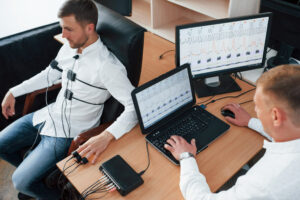
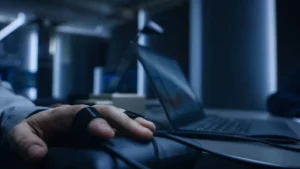
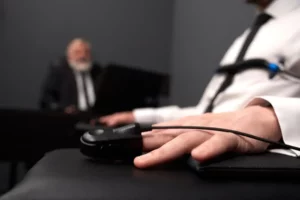
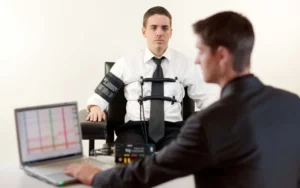
Finger electrodes should go on the index and middle finger, snug, but not cutting off circulation. This takes about 15–30 seconds to do properly.
Pneumograph tubes (chest and abdomen) should be placed with a smooth motion: one just under the chest line, and one around the stomach. Watch for centered positioning and symmetry.
Once everything’s attached, the examiner should tap or press the machine’s screen or keyboard—not just once, but typically 2–3 button taps to check calibration and signal registration.
If they’re fumbling with the gear, re-tightening everything more than once, or asking you how it feels before they even check the screen—it’s something to take note of.
2. Communication Style and Behavior
Pay close attention to the tone, pace, and wording. You’re not just listening for what’s said—you’re tracking how it’s delivered.
Eye contact should last between 3 and 5 seconds, then break naturally.
Speech volume should stay in the 60–70 dB range—this is regular conversation level, no shouting or whispering.
Instructions will usually fall under 15 words. For example:
“Take a deep breath, we’ll begin after a few calibration questions.”
If it sounds scripted but still clear, you’re probably in good hands. If it sounds unsure or overexplained, that’s a different story.
3. Handling the Question Process
Here’s where structure really shows up.
After each question is asked, there should be a 1–2 second pause before you’re expected to respond.
As soon as you answer, the examiner’s eyes usually drop to the chart for a 1-second scan—quick and focused.
No unnecessary chatting, no rephrasing unless required, and absolutely no rushing through. Each question has a rhythm.
You’ll also notice that posture plays a part: the best examiners remain mostly still, with less than 10% body shift between questions. No tapping pens, no crossed arms, no pacing.
4. Handling Interruptions or Adjustments
Let’s say there’s a noise outside or a sensor slips. What now?
A seasoned examiner will pause and re-check the sensors in under 10 seconds.
If any sensor is loose or off, they’ll adjust it in 2–3 seconds without drawing attention.
The process resumes immediately without explanation unless you ask.
This type of reset looks sharp, not sloppy. And they won’t hesitate—they’ll just do.
Final Thought
You don’t need to know how to run a polygraph machine. But by keeping an eye on timing, gestures, tone, and sensor placement, you’ll quietly gather everything you need to know about the person sitting across from you.